
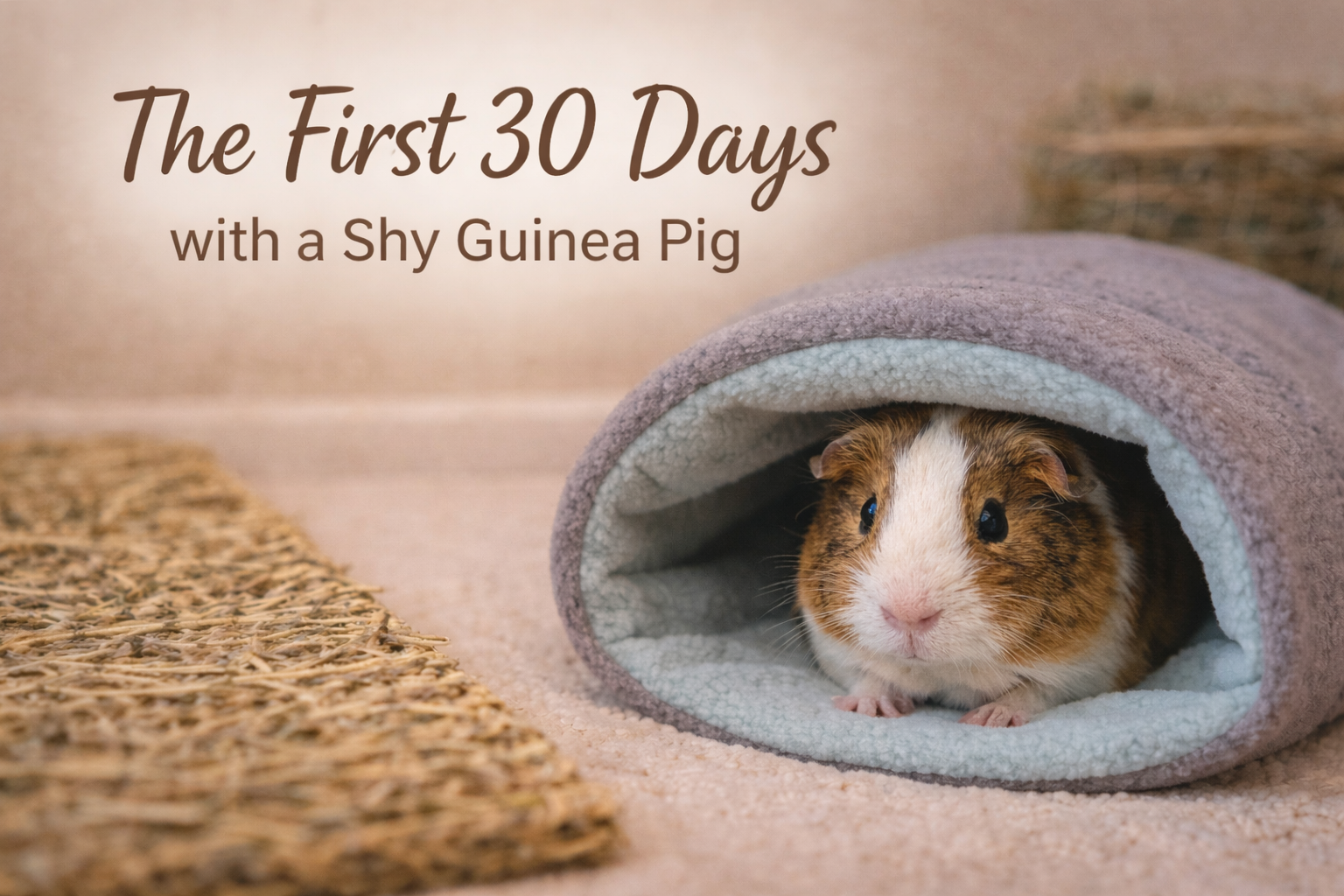
Bringing home a shy guinea pig can feel emotionally confusing. They don’t run to you. They don’t popcorn. They might barely move at all.
If you’re wondering whether you’re doing something wrong — you’re not. Progress with shy guinea pigs is quiet, subtle, and often misunderstood.
Here’s what the first 30 days usually look like — and why slow is actually a very good sign.
Week 1: Survival Mode (And That’s Okay)
During the first week, many guinea pigs freeze, hide constantly, or only move when you’re not around.
This isn’t stubbornness — it’s instinct.
- They may only eat when you leave the room
- They may stay inside one hideout all day
- They may flinch at normal household sounds
Your job this week: create safety, not interaction.
Amazon Affiliate Pick: Soft Fleece Guinea Pig Hideout
Week 2: Small Movements Mean Big Trust
This is when progress often starts — but it’s easy to miss.
You might notice:
- Peeking out of hideouts when you’re nearby
- Moving between shelters instead of staying frozen
- Eating hay while you sit quietly nearby
These moments matter. They mean your guinea pig is beginning to feel safe while observed.
Amazon Affiliate Pick: Natural Hay Foraging Mat
Week 3: Curiosity Starts to Compete with Fear
By week three, many shy guinea pigs begin exploring in short bursts.
- A few steps forward… then retreat
- Investigating new textures
- Occasional popcorns after hiding
This is confidence building in real time.
Scatter feeding and enrichment allow curiosity without pressure.
Amazon Affiliate Pick: Guinea Pig Enrichment Tunnel Set
Week 4: Trust Looks Different for Every Guinea Pig
By the end of the first month, some guinea pigs will greet you for food. Others will still be shy — and that’s okay.
Trust isn’t measured by cuddles. It’s measured by:
- Relaxed body posture
- Willingness to eat while you’re nearby
- Curiosity replacing constant fear
Progress is not linear — and that’s normal.
A Gentle Lesson for Families (and Kids)

If your household includes children learning patience with a shy guinea pig, our book Blueberry Meets Ginger mirrors this exact journey.
It’s a warm story about slow trust, gentle introductions, and learning that friendship doesn’t have to be rushed.
📘 Learn more about Blueberry Meets Ginger
Common Mistakes That Slow Confidence
- Too much handling too soon
- Large open spaces without cover
- Rearranging the enclosure too often
- Expecting visible affection
Confidence grows when guinea pigs feel in control.
Related TinyZoomies Reads
- Bonded for Life: How to Get the Social Side of Guinea Pigs Right
- Behind the Scenes of Guinea Pig Care
Watch Real Progress on TinyZoomies
We share real guinea pig behavior — including shy moments — on our short-form channels:
Final Thoughts
If your guinea pig seems frozen, quiet, or reserved — you’re not failing them.
You’re giving them the time they need.
And one day, without warning, you’ll notice something small… and realize trust has quietly arrived. 💚

Leave a Reply