
As guinea pig parents, we want to know our little potatoes are happy and healthy — but sometimes it’s hard to know what changes are normal and what might be subtle red flags.
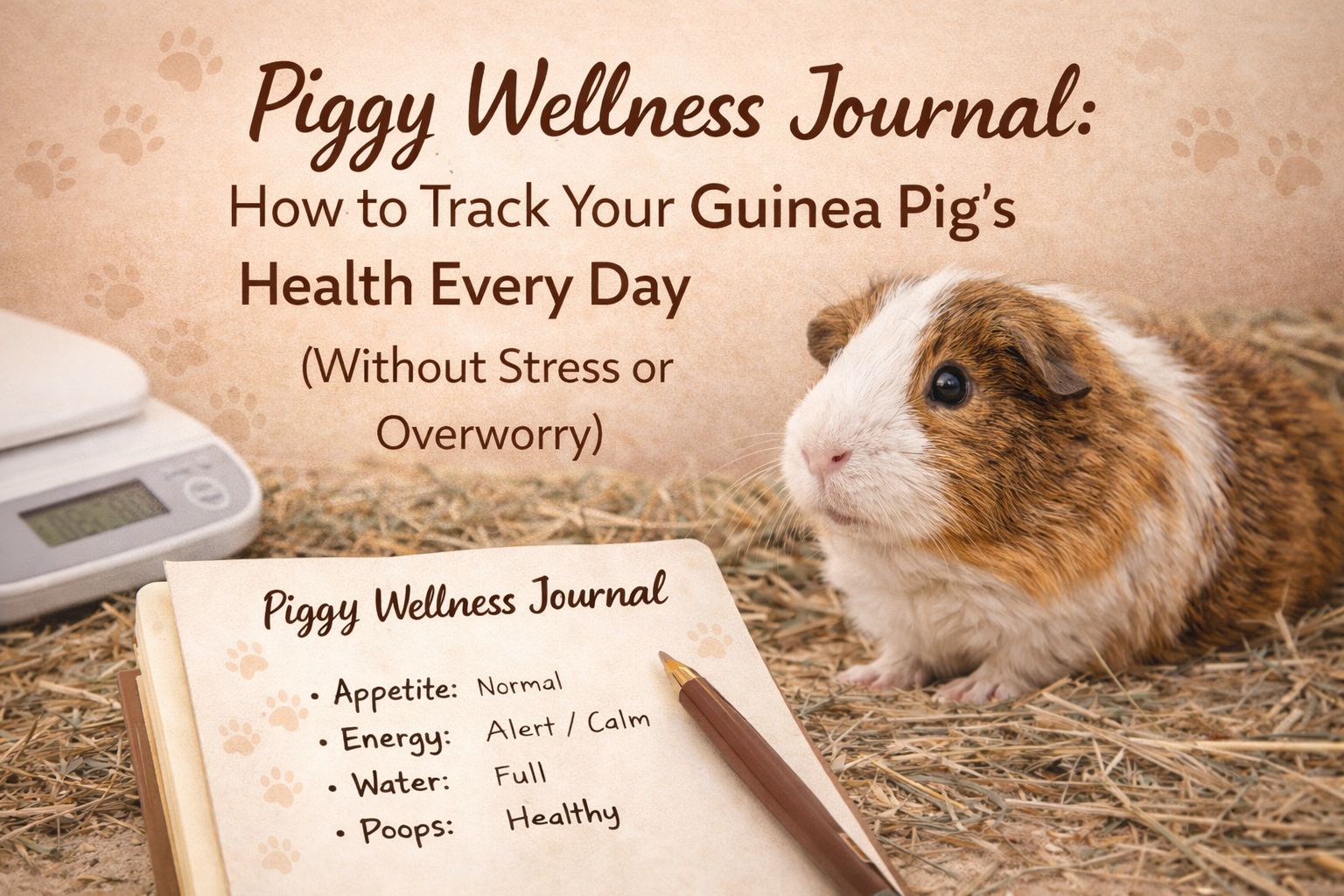
The good news? You don’t need a vet degree. You just need a simple **wellness journal** and a gentle approach to tracking your guinea pig’s day-to-day life. This helps you catch patterns early, understand your pig’s rhythm, and feel confident in your care.
This post contains affiliate links. TinyZoomies may earn a small commission at no extra cost to you.
What Is a Guinea Pig Wellness Journal?
A wellness journal is your personal (and meaningful!) way to record little details that add up over time — things like appetite, droppings, mood, bathroom habits, grooming, and how they respond to enrichment.
Keeping a record helps you answer questions like:
- Has Appetite Changed?
- Are Poops Consistent?
- Is Your Piggy Drinking Enough?
- Any Unusual Behavior After New Treats?
Tracking daily patterns builds a clearer picture of your guinea pig’s overall health and comfort.
What to Track Daily
Here’s a simple list you can use as a checklist each day:
- Appetite: Eating hay, pellets, veggies
- Water Intake: Bottle full/half/empty
- Poop Size & Quantity: Normal, little, too soft?
- Energy Level: Zoomies, quiet nap, alert?
- Grooming: Clean coat, dull coat, greasy?
Note: It’s completely normal for energy and appetite to vary a bit day-to-day — but patterns over time are telling.
Tools That Make Tracking Easy
Here are some everyday tools that help you observe, record, and reflect — without stress:
- Small Digital Kitchen Scale — great for tracking food and treats with precision

Useful for weighing pellets, hay portions, and monitoring appetite trends.
- Daily Planner / Journal Notebook

Perfect for jotting simple wellness logs each day.
- Quiet Analog Timer

Use this during floor time to note playtime and energy levels.
How to Use Your Journal (Without Becoming Obsessed!)
This isn’t about documenting everything to a T — it’s about gently noticing patterns. Try this simple flow:
- Before Bed: Scan for appetite & mood
- Morning: Check droppings & energy
- Evening: Reflect on floor time or enrichment
Keep it short. One line a day is plenty. Over time, you’ll see patterns emerge that help you distinguish “normal variability” from possible issues.
What Patterns Might Mean
- Loose Poops + Low Appetite: Could signal dehydration — watch closely
- Sudden Energy Drop: Could be a nap or a comfort adjustment — check other signs
- Consistent Good Appetite + Play: Strong trend toward comfort
Read more about guinea pig behavior:
What Your Guinea Pig’s Behavior Is Trying to Tell You
A Gentle Story About Routine
If you want a heartwarming way to introduce kids (or yourself) to the idea of mindful observation and patience, our book Blueberry’s New Home fits beautifully. It demonstrates how small, everyday moments build trust — the same way daily journaling helps you understand your piggy.

📘 Blueberry’s New Home — A Gentle Story of Patience and Familiarity
Share Your Journal Moments!
We love seeing TinyZoomies families observing little patterns. Share your wellness notes and progress clips on our social channels:
Final Thought
Tracking your guinea pig’s health doesn’t have to be intimidating. With gentle attention and a simple journal, you’ll begin to notice the patterns that matter — and enjoy every little moment along the way.

Leave a Reply