
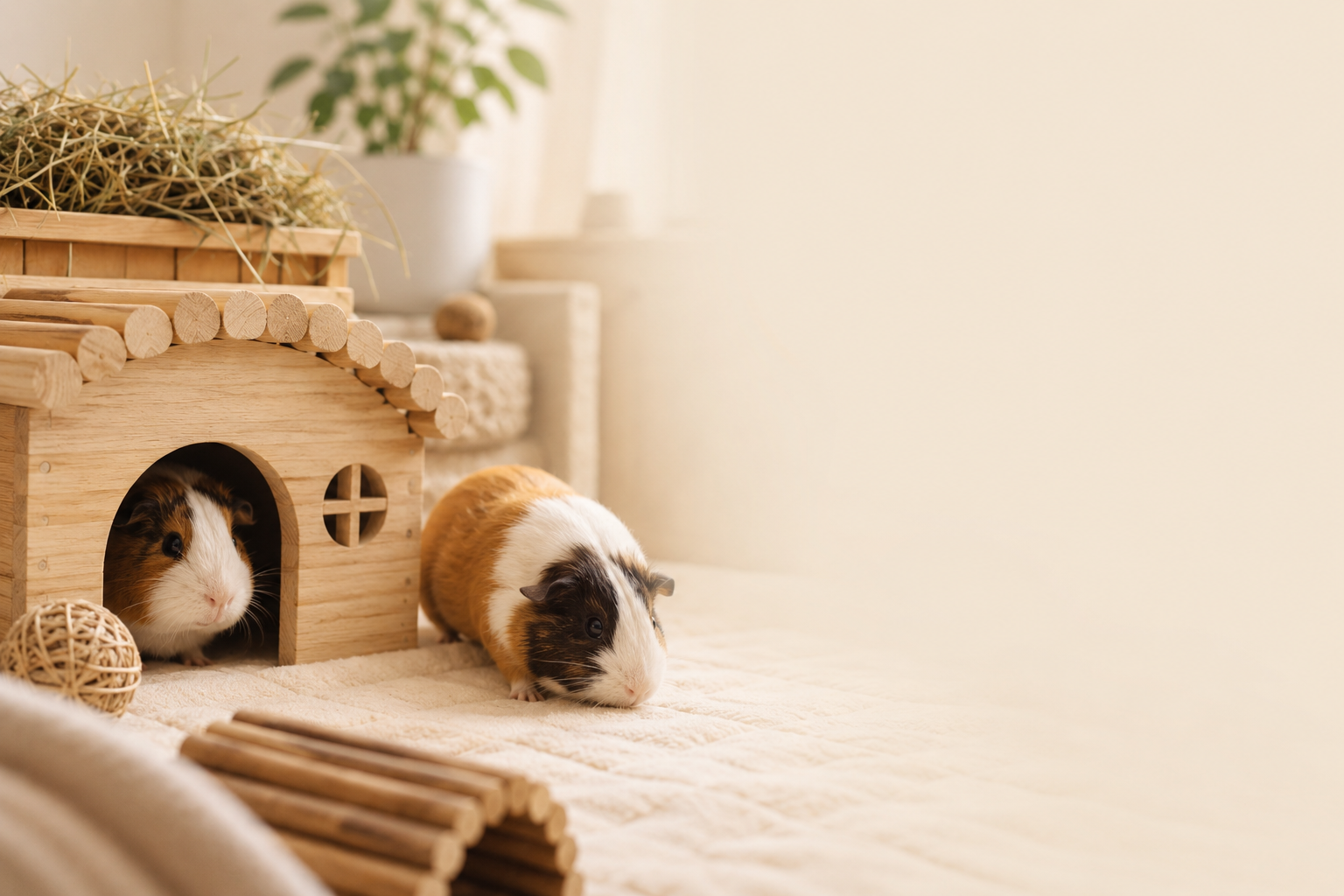
One day your guinea pig is zooming around the cage, begging for veggies, and popcorning happily… and then suddenly they start hiding all the time.
If this sounds familiar, don’t panic. Guinea pigs are naturally cautious animals, and changes in hiding behavior often have understandable causes.
Sometimes the reason is simple. Other times, it can signal stress, discomfort, or illness.
Learning how to read these subtle changes can help you create a calmer, happier environment for your piggy.
This article contains affiliate links. TinyZoomies may earn a commission at no extra cost to you.
🐹 1. Your Guinea Pig Is Still Building Trust
Many guinea pigs need weeks — sometimes months — to fully feel safe in a new home.
Quiet interaction, routine feeding times, and gentle handling help build confidence gradually.
Helpful calming hideout:
Natural Wooden Guinea Pig Hideout House
🔊 2. Loud Noises or Sudden Activity
Guinea pigs are prey animals with sensitive hearing.
Things humans barely notice can feel alarming to piggies:
- Vacuum cleaners
- Dogs barking
- Children running nearby
- TV volume spikes
- Construction sounds
Creating a calm environment can dramatically improve confidence.
🏡 3. Not Enough Covered Spaces
Open spaces can feel unsafe to guinea pigs.
Every pig should have:
- A private hideout
- Tunnel access
- Covered resting areas
- Safe corners to retreat into
Soft Guinea Pig Tunnel & Hide Set
🍽️ 4. Changes in Routine
Guinea pigs thrive on predictability.
Even small disruptions can affect behavior:
- Moving furniture
- Changing feeding times
- Cleaning too aggressively
- New pets nearby
Try maintaining a steady daily routine whenever possible.
🤒 5. Illness or Discomfort
Sometimes increased hiding is an early warning sign.
Watch for:
- Reduced appetite
- Weight loss
- Less vocalizing
- Low energy
- Changes in droppings
Visit our other blog post for additional care resources:
Piggy Wellness Journal
🧸 6. Lack of Enrichment
Bored guinea pigs often become withdrawn.
Enrichment encourages curiosity and confidence.
Natural Guinea Pig Chew Toy Set
🐾 7. Cage Mate Tension
Even bonded guinea pigs can occasionally experience social stress.
Signs include:
- Blocking access to food
- Rumble strutting
- Teeth chattering
- One pig hiding constantly
Make sure multiple hideouts and feeding stations are available.
🌡️ 8. Temperature Stress
Guinea pigs can become lethargic and withdrawn if they’re too hot or too cold.
Ideal temperature range:
- 65°F–75°F (18°C–24°C)
More on your piggy’s comfort:
Seasonal Care for Guinea Pigs
💛 9. Confidence Builds Slowly
Some guinea pigs are naturally cautious personalities.
Confidence grows through:
- Routine
- Patience
- Gentle interaction
- Positive associations with food
📖 A Story About Trust & Friendship
Trust is one of the central themes in Blueberry Meets Ginger — where two guinea pigs slowly learn comfort, friendship, and safety together.
📘 Blueberry Meets Ginger — A Heartwarming Guinea Pig Story

🎥 Watch TinyZoomies for More Piggy Behavior Tips
🔗 Helpful TinyZoomies Articles
- What Your Guinea Pig’s Behavior Is Trying to Tell You
- The Ultimate Guinea Pig Cage Setup Guide
- How to Travel with Guinea Pigs
- More TinyZoomies Care Guides
💭 Final Thoughts
When guinea pigs hide more than usual, they’re trying to communicate something.
Sometimes they simply need more time and patience. Other times, they’re telling you they don’t fully feel safe yet.
The good news? Small changes in environment, routine, and enrichment can make a huge difference.
And once your piggy starts feeling secure again… the zoomies usually return.

Leave a Reply