
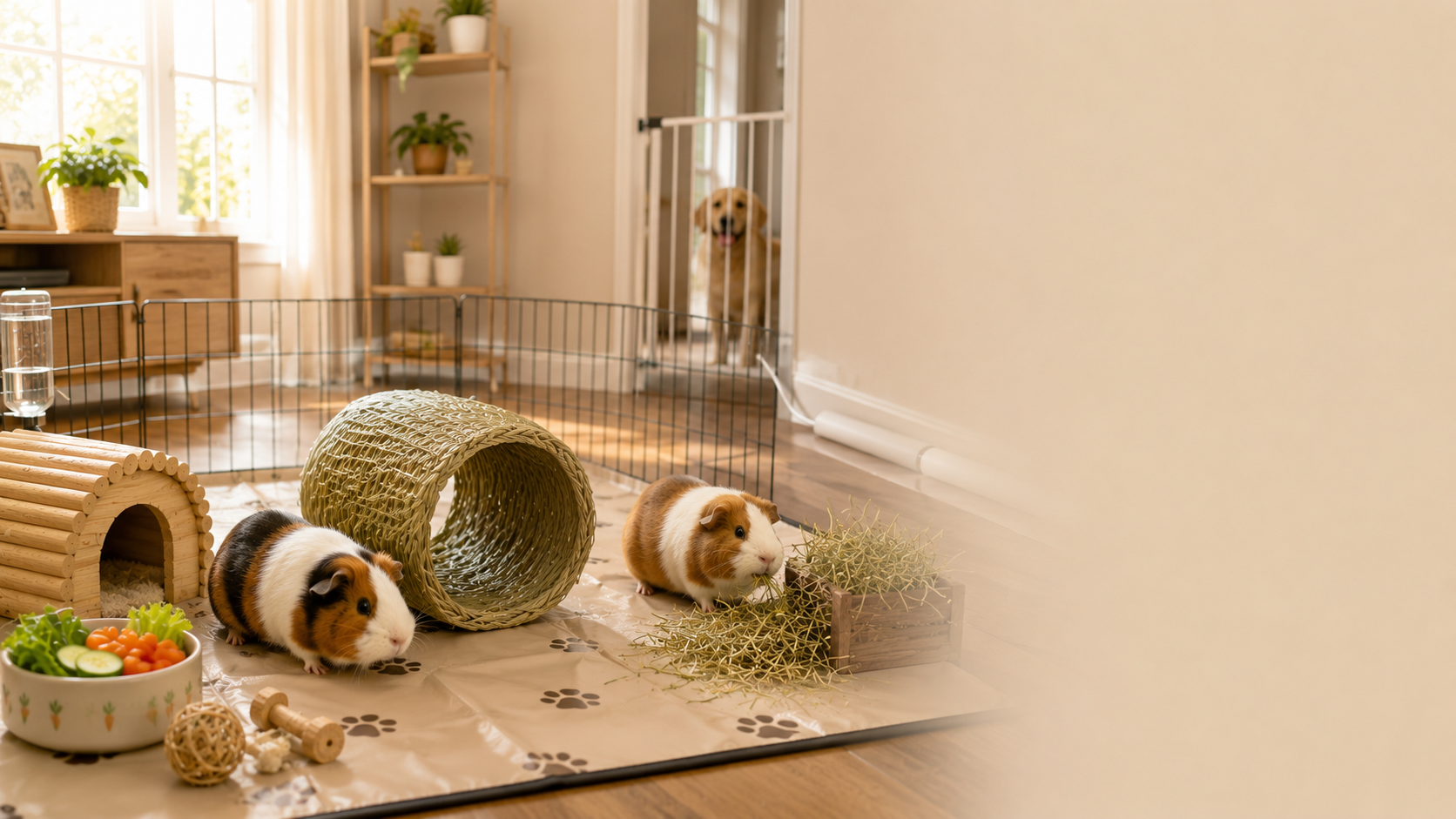
Guinea pigs may be small, but they’re naturally curious. Once your furry friend starts enjoying regular floor time, your home suddenly becomes their playground—and what looks harmless to us can quickly become dangerous for them.
Whether you’re giving your guinea pig supervised exercise or allowing them to explore a dedicated play area, taking a few simple precautions can prevent injuries, reduce stress, and give you peace of mind.
In this guide, we’ll cover the most common household hazards and show you how to create a guinea pig-friendly environment where your little companion can safely popcorn, zoom, and explore.
Disclosure: This article contains affiliate links. As an Amazon Associate, Tiny Zoomies earns from qualifying purchases at no additional cost to you.

Why Guinea Pig-Proofing Matters
Unlike dogs and cats, guinea pigs don’t understand which objects are dangerous. They investigate the world with their noses—and especially with their teeth. A single unattended electrical cord, toxic plant, or open doorway can turn an enjoyable floor-time session into an emergency.
Creating a safe environment lets your guinea pig explore confidently while helping you relax and enjoy watching their natural behaviors.
⚡ 1. Protect Electrical Cords
Electrical cords are one of the biggest household hazards for guinea pigs. They may chew on charging cables, extension cords, or lamp wires, risking severe injury or electrocution.
Safety Tips
- Cover exposed cords with protective cord sleeves.
- Bundle loose cables behind furniture.
- Block access to entertainment centers and desks.
- Never leave charging cables dangling within reach.
Recommended Product
Heavy-Duty Cord Protector Sleeves

🌿 2. Remove Toxic Houseplants
Many popular houseplants can be harmful if chewed. Even a few bites may upset your guinea pig’s digestive system or cause more serious health problems.
Common Plants to Keep Out of Reach
- Lilies
- Pothos
- Philodendron
- English Ivy
- Peace Lily
- Dieffenbachia
- Aloe Vera
If you’re unsure whether a plant is safe, keep it well outside your guinea pig’s play area.
🛋️ 3. Watch for Furniture Hazards
Your guinea pig can squeeze into surprisingly small spaces beneath couches, recliners, and entertainment centers.
Reclining furniture is especially dangerous because moving mechanisms can trap a hidden guinea pig.
Before Floor Time
- Block off areas beneath furniture.
- Inspect reclining chairs before moving them.
- Avoid heavy furniture with exposed mechanisms.
- Keep closets and cabinets closed.
🐶 4. Keep Other Pets Separate
Even friendly dogs and cats can unintentionally frighten or injure a guinea pig.
During floor time:
- Close doors to the room.
- Supervise every interaction.
- Never assume a calm pet will ignore a running guinea pig.
- Give your guinea pig a safe hideout where they can retreat if they feel nervous.
🧴 5. Store Cleaning Chemicals Safely
Guinea pigs spend much of their time sniffing and nibbling objects near the floor, making them especially vulnerable to cleaning products.
Keep away from:
- Bleach
- Disinfectant sprays
- Air fresheners
- Essential oil diffusers
- Pesticides
- Open cleaning buckets
Allow cleaned floors to dry completely before letting your guinea pig explore.
🚪 6. Create a Safe Floor-Time Zone
The safest way to provide exercise is by creating a dedicated guinea pig play area.
A secure space helps prevent escapes while allowing your guinea pig to enjoy enrichment without unexpected hazards.
Your Play Area Should Include:
- Soft washable play mat
- Exercise pen
- Several wooden hideouts
- Grass tunnels
- Unlimited timothy hay
- Fresh water
- Safe chew toys
Recommended Products
Expandable Small Animal Exercise Pen


🚧 7. Block Escape Routes
Guinea pigs are surprisingly fast when they feel adventurous!
Check for:
- Open doors
- Loose baby gates
- Gaps beneath furniture
- Accessible stairways
- Heating vents
Recommended Product
🦷 8. Offer Safe Alternatives to Chew
Chewing is a healthy, natural behavior that helps wear down continuously growing teeth. Instead of letting your guinea pig chew furniture or baseboards, provide safe alternatives.
Great Options
- Apple wood sticks
- Willow balls
- Timothy hay
- Untreated wooden chew toys
Recommended Product

📝 Guinea Pig-Proofing Checklist
Before every floor-time session, take a minute to confirm:
- ☐ Electrical cords covered
- ☐ Toxic plants removed
- ☐ Cleaning supplies stored away
- ☐ Other pets separated
- ☐ Escape routes blocked
- ☐ Hideouts available
- ☐ Fresh hay and water provided
- ☐ Safe chew toys ready
📖 Teach Safety Through Storytime
Helping children understand how to care for guinea pigs starts with learning about patience and creating a safe environment.
Blueberry’s New Home introduces young readers to the importance of making a guinea pig feel secure in unfamiliar surroundings, while Blueberry Meets Ginger celebrates companionship, trust, and sharing a happy home.


🔗 Continue Reading on Tiny Zoomies
- The Ultimate Guinea Pig Cage Setup Guide
- The Guinea Pig Happiness Blueprint
- Piggy Wellness Journal
- Guinea Pig Emergency Kit
- The Complete Guinea Pig Adoption Checklist
🎥 Join the Tiny Zoomies Community
Looking for more guinea pig care tips, enrichment ideas, and adorable daily moments?
💛 Final Thoughts
Guinea pig-proofing your home isn’t about limiting your pet’s adventures—it’s about making those adventures safe. By taking a few simple precautions before every floor-time session, you can encourage exploration, build confidence, and prevent many common household accidents.
Your guinea pig depends on you to create a secure environment where they can popcorn, zoom, and satisfy their natural curiosity. A little preparation today can lead to years of happy, healthy exploration together.

Leave a Reply